

الوصف
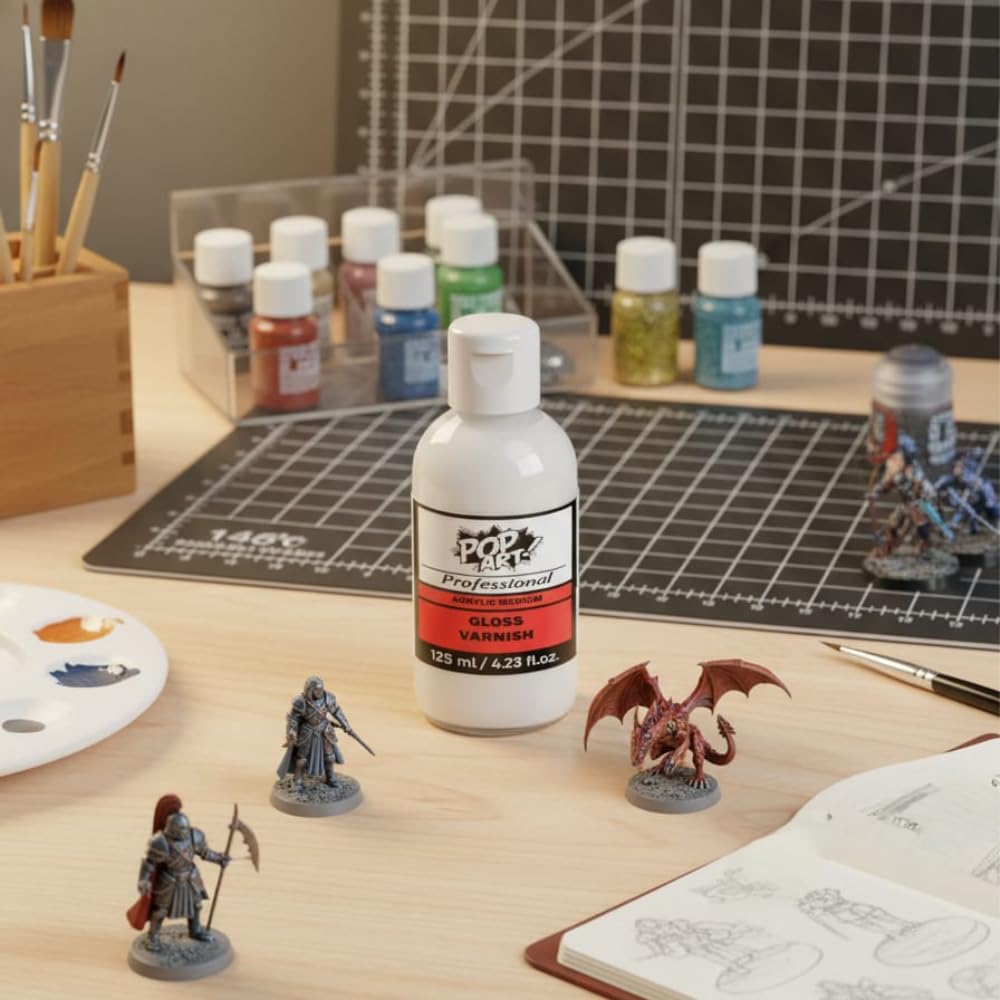
Acrylic Gloss Varnish for Miniatures, Models & Artwork
POP ART Acrylic Gloss Varnish is a clear finishing coat designed to protect painted surfaces while creating a smooth, glossy appearance.
Use it over fully dried compatible acrylic paint on miniatures, scale models, 3D prints, statues, crafts, canvas and other painted projects where a reflective clear finish is desired.
The gloss surface can enhance color depth and contrast while providing an additional protective layer over the finished paintwork.
Available in 125ml and 250ml sizes, it can be used for individual hobby projects or regular model-painting and studio workflows.
What Is Acrylic Gloss Varnish?
Acrylic gloss varnish is a transparent finishing product applied over completed acrylic paint.
After application, it forms a clear layer with a glossy surface.
It can be used for two main purposes:
- protecting painted work from routine handling and surface contamination
- changing the final appearance to a glossy or reflective finish
Gloss varnish is also commonly used at intermediate stages of scale-model painting when a smoother surface is useful before decals or certain weathering techniques.
What Does Gloss Varnish Do?
Acrylic gloss varnish can help provide:
- a clear protective finishing layer
- a glossy reflective surface
- deeper-looking colors
- increased visual contrast
- smoother surface appearance
- preparation for decal application
- a suitable surface for some weathering workflows
- wet, glass, lens and similar visual effects
The final result depends on application thickness, surface preparation and the underlying paint.
Acrylic Gloss Varnish for Miniatures
Miniatures are regularly handled during painting, gaming, transport and display.
Applying varnish after the paintwork is finished can provide an additional layer between the painted surface and routine handling.
Gloss varnish creates a noticeable reflective finish, which can be useful for:
- armor
- gems
- lenses
- glass
- wet effects
- slime effects
- polished surfaces
- metallic details
If you prefer an overall matte appearance, gloss varnish can also be used during the finishing workflow and followed with a compatible matte varnish where required.
Acrylic Gloss Varnish for Scale Models
Gloss varnish is especially useful for aircraft, vehicles, armor, ships, Gunpla and other scale-model projects.
A smooth glossy surface may help with:
- decal placement
- panel-line work
- weathering preparation
- surface protection between painting stages
- creating polished or wet-looking areas
- controlling the final sheen of different model parts
Build the varnish in controlled coats rather than applying one excessively heavy layer.
Gloss Varnish Before Decals
Scale-model builders often apply a gloss coat before decals.
A smoother surface can help decals sit more evenly against the painted model and may reduce the visibility of trapped air beneath transparent decal film.
Allow the varnish layer to dry adequately before applying decals.
After the decal and weathering stages are complete, you can apply the final varnish finish required for the model.
Acrylic Gloss Varnish for 3D Prints
Painted 3D prints can also benefit from a final clear varnish.
POP ART Acrylic Gloss Varnish can be used on properly prepared and painted PLA, resin and other compatible printed models.
Before varnishing:
- clean the print
- complete sanding and preparation
- apply a suitable primer when required
- finish the paint layers
- allow the paint to dry adequately
Then apply the varnish in controlled coats.
Thin applications help preserve sculpted and printed surface details.
Acrylic Gloss Varnish for Statues and Figures
Statues, busts and display figures often combine different surface finishes.
Gloss varnish can be used selectively on areas that should appear reflective, polished or wet.
Examples include:
- eyes
- lenses
- polished armor
- jewelry
- water
- blood effects
- slime
- glossy leather
- decorative surfaces
Other areas can remain matte or satin depending on the desired visual effect.
Acrylic Gloss Varnish for Canvas and Crafts
Gloss varnish can also be used as a finishing layer on compatible acrylic artwork and craft projects.
It creates a more reflective surface and can make some colors appear deeper or more saturated.
Because glossy finishes reflect light strongly, consider the final display environment when deciding whether gloss is the best finish for the entire artwork.
For projects where reflections are undesirable, matte or satin varnish may be more appropriate.
Gloss Varnish vs Matte Varnish
Gloss and matte varnishes produce very different appearances.
Gloss varnish creates a reflective surface and can make colors appear richer or deeper.
Matte varnish reduces reflections and creates a flatter appearance.
Neither finish is automatically correct for every project.
Choose the final varnish according to the desired visual result.
Some painters also combine finishes—for example, using matte across most of a miniature while applying gloss selectively to lenses, liquids or polished surfaces.
Gloss Varnish vs Satin Varnish
Satin sits visually between gloss and matte.
It provides some reflection without producing the highly polished appearance of gloss varnish.
Choose:
- Gloss for strong reflections and polished effects
- Satin for moderate sheen
- Matte for minimal reflection
The best finish depends on the material or visual effect you are trying to represent.
How to Apply Acrylic Gloss Varnish With a Brush
Make sure the underlying acrylic paint is adequately dry before applying varnish.
Use a clean, soft brush suitable for smooth application.
Apply the varnish in a thin, controlled layer.
Avoid repeatedly brushing over areas that have already begun to set, because excessive working can affect the appearance of the finish.
Check the surface from different angles to identify missed areas or excessive pooling.
Allow the coat to dry according to the product and environmental conditions before deciding whether another coat is required.
How to Airbrush Acrylic Gloss Varnish
Acrylic gloss varnish may also be applied through a compatible airbrush setup.
Airbrush performance depends on:
- varnish consistency
- nozzle size
- airbrush design
- air pressure
- environmental conditions
- desired coat thickness
If adjustment is necessary, use a compatible thinning method appropriate for the varnish rather than automatically applying one fixed thinning ratio.
Test the mixture and spray pattern on a spare surface before applying it to the finished model.
Build the varnish using controlled passes.
Avoid excessively wet application, which can lead to runs or pooling.
Clean the airbrush promptly after varnishing.
How Many Coats of Gloss Varnish Should You Apply?
There is no universal number of coats required for every project.
One controlled coat may provide the appearance you want, while another project may benefit from additional coverage.
The required amount depends on:
- application thickness
- surface texture
- desired gloss level
- application method
- type of project
Several controlled coats are usually easier to manage than one excessively heavy application.
Should Paint Be Dry Before Varnishing?
Yes.
The underlying paint should be adequately dry before varnish is applied.
The required drying period varies according to:
- paint thickness
- paint formulation
- temperature
- humidity
- underlying materials
Avoid locking moisture into thick or insufficiently dried paint layers.
If uncertain, allow additional drying time before applying the varnish.
Can Gloss Varnish Be Used Before Weathering?
Gloss varnish is commonly used in scale-model workflows before certain weathering stages.
Its smoother surface can be useful for techniques such as panel-line work and some washes.
However, compatibility should always be considered when combining different paint, varnish and weathering systems.
Test unfamiliar combinations before applying them to an important model.
Can Oil or Enamel Products Be Used Over Acrylic Gloss Varnish?
Some modelers use oil- or enamel-based weathering products over a fully dried acrylic gloss layer.
However, compatibility can vary between formulas.
Allow the acrylic varnish to dry adequately and test the combination before using strong solvent-based products across the entire project.
Do not assume that every solvent product is compatible with every acrylic varnish.
Can Gloss Varnish Be Covered With Matte Varnish?
A compatible matte varnish can be applied later when a lower-sheen final appearance is desired.
This can be useful when a glossy intermediate surface was used for decals or weathering but the final model should have a matte finish.
Make sure previous layers are adequately dry before adding another varnish system.
Does Gloss Varnish Make Colors Look Different?
A glossy surface reflects light differently from a matte surface.
As a result, colors can appear:
- deeper
- more saturated
- higher in contrast
- darker in some viewing conditions
This visual change is caused largely by the surface sheen.
Test the varnish first if the exact final appearance is important.
Using Gloss Varnish for Wet and Glass Effects
Gloss varnish is useful for selectively creating reflective effects.
Try it on:
- miniature eyes
- goggles
- vehicle lights
- glass
- water
- slime
- blood effects
- oil stains
- polished stones
- glossy leather
- gems
Selective gloss often creates a stronger visual effect than applying gloss uniformly across every surface.
How to Avoid Brush Marks
Use an appropriate soft brush and apply the varnish in controlled strokes.
Avoid excessive brushing after the coating begins to set.
Do not overload the surface with varnish.
If the varnish requires adjustment for your application method, use a compatible thinning approach and test first.
Surface preparation and application technique both affect the final smoothness.
How to Avoid Bubbles
Mix the varnish according to its product instructions.
Avoid introducing unnecessary air into the liquid immediately before application.
When brushing, use controlled strokes rather than aggressive agitation.
If bubbles appear on the surface, avoid repeatedly disturbing a layer that has already begun to dry.
How to Avoid Cloudy Varnish
Cloudiness can result from several causes, including:
- excessive application thickness
- unsuitable environmental conditions
- moisture
- incompatible underlying materials
- insufficient drying between layers
Apply controlled coats under suitable conditions and test unfamiliar paint/varnish combinations beforehand.
Protecting Gaming Miniatures
Gaming miniatures experience frequent handling.
A clear varnish provides an additional finishing layer over the painted surface.
For models where a full gloss appearance is not desired, you can control the final sheen with a compatible matte or satin varnish after the required finishing stages.
Areas such as gems, lenses or wet effects can then receive selective gloss again if desired.
Preparing the Surface Before Varnishing
Before applying gloss varnish:
- make sure painting is complete
- allow the paint to dry adequately
- remove dust
- remove loose particles
- avoid touching the surface with oily fingers
- inspect for areas that require correction
A clean surface helps produce a more consistent clear finish.
Caring for Varnished Models
Even varnished models should still be handled carefully.
Varnish adds a finishing layer but does not make painted work indestructible.
Avoid unnecessary abrasion, harsh chemicals and unsuitable storage conditions.
For display models, occasional gentle dust removal can help maintain the appearance of the finish.
Available Sizes
POP ART Acrylic Gloss Varnish is available in:
- 125ml – suitable for hobby painters and individual projects
- 250ml – useful for frequent painting and larger workflows
Choose the size according to the number and scale of projects you typically varnish.
Complete Your Painting and Finishing Workflow
A complete miniature and model-painting workflow may include:
- acrylic primer
- model paints
- airbrush paints
- washes and inks
- thinners and mediums
- gloss varnish
- matte varnish
- brushes
- airbrush equipment
Prepare the surface first, build the paint in controlled layers, complete decals and weathering when applicable, then select the varnish finish that suits the final project.
Frequently Asked Questions
What is acrylic gloss varnish used for?
It is used as a transparent finishing layer over compatible painted surfaces to provide a glossy appearance and additional surface protection.
Can I use acrylic gloss varnish on miniatures?
Yes. It can be used on properly painted miniatures, gaming figures and display models.
Can I use gloss varnish on 3D prints?
Yes, over properly prepared and painted compatible 3D prints.
Can acrylic gloss varnish be airbrushed?
Yes, when used with a compatible airbrush setup and adjusted appropriately when necessary.
Is gloss varnish the same as matte varnish?
No. Gloss creates a reflective finish, while matte varnish reduces reflections.
Can I apply matte varnish over gloss varnish?
Compatible varnish systems can be layered when the previous coat has dried adequately.
Is gloss varnish useful before decals?
A smooth gloss layer is commonly used in scale-model workflows before decal application.
Does gloss varnish completely prevent paint damage?
No varnish makes painted work indestructible. It adds an additional finishing layer that can help protect the underlying paint during normal handling.
Shop Acrylic Gloss Varnish in Egypt
POP ART Acrylic Gloss Varnish is available in 125ml and 250ml sizes for miniature painters, scale-model builders, 3D-print painters, artists and hobbyists.
Use it as a transparent glossy finishing coat to protect completed acrylic paintwork, enhance surface reflections and create polished, wet or glass-like effects where required.

 AR
AR  EN
EN