



الوصف
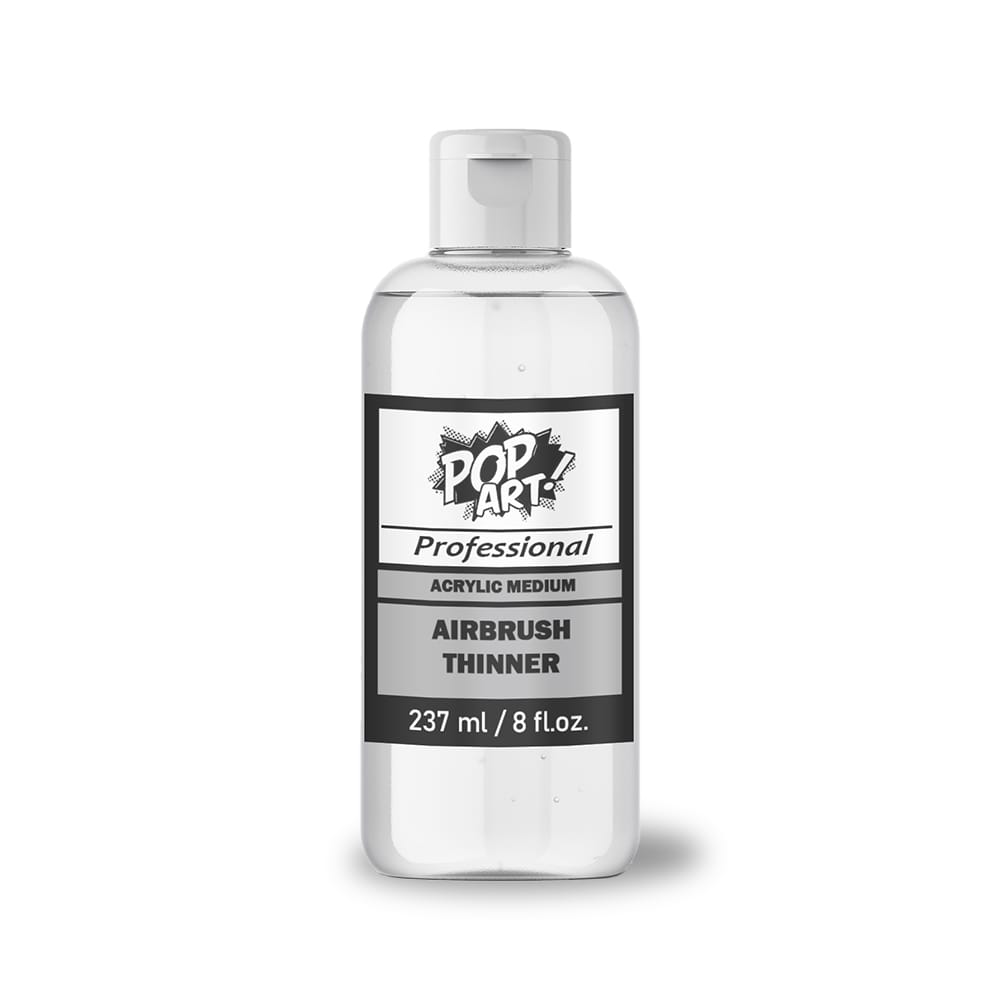
Acrylic Airbrush Thinner 237ml for Model & Hobby Paint
POP ART Acrylic Airbrush Thinner is a 237ml paint reducer designed to adjust the viscosity of compatible water-based acrylic paints for airbrush application.
Use it when acrylic paint is too thick for your airbrush setup or when you need greater control over atomization, spray pattern and paint flow.
It is suitable for miniature painting, scale models, 3D prints, figures, dioramas and other hobby-painting applications using compatible acrylic colors.
Rather than relying on one fixed mixing ratio, add airbrush thinner gradually and adjust the mixture according to the paint, nozzle size, air pressure and spraying technique.
What Does Airbrush Thinner Do?
Airbrush thinner reduces the viscosity of acrylic paint so it can pass more easily through an airbrush.
Proper paint consistency can help support:
- smoother atomization
- more controlled spraying
- finer paint layers
- smoother gradients
- easier base coating
- improved performance through smaller nozzle sizes
- reduced excessive paint buildup
- more consistent spray patterns
The ideal amount of thinner varies depending on the paint and equipment being used.
Airbrush Thinner vs Acrylic Thinning Medium
Airbrush thinner and acrylic thinning medium have related but slightly different roles.
An acrylic thinning medium can be useful for adjusting paint consistency for brush painting, glazing, layering and some airbrush applications.
An airbrush thinner is more specifically intended for preparing compatible acrylic paint for spraying through an airbrush.
If your main goal is airbrushing miniatures, scale models or 3D prints, airbrush thinner is generally the more directly targeted auxiliary product.
Airbrush Thinner vs Flow Improver
Airbrush thinner and flow improver should not be treated as exactly the same product.
Airbrush thinner primarily reduces paint viscosity so the paint can pass through the airbrush more easily.
Flow improver is intended to influence paint flow and working behavior and may be useful when acrylic paint begins drying quickly around the airbrush needle.
Depending on your paint, equipment and environmental conditions, you may use thinner, flow improver or both.
For dedicated flow-control applications, use a compatible airbrush flow improver rather than simply adding excessive thinner.
How Much Airbrush Thinner Should You Use?
There is no universal paint-to-thinner ratio that works for every acrylic paint and every airbrush.
Paint consistency varies between:
- brands
- individual colors
- pigment types
- model paints
- airbrush paints
- craft acrylics
- nozzle sizes
- pressure settings
Start with a small amount of thinner and mix thoroughly.
Test the paint through your airbrush. If the mixture is still too thick for smooth spraying, add a little more thinner and test again.
Gradual adjustment is more reliable than automatically using a fixed ratio.
How to Thin Acrylic Paint for Airbrushing
Start by placing the acrylic paint in a suitable mixing cup or airbrush paint cup.
Add a small amount of POP ART Acrylic Airbrush Thinner and mix thoroughly.
Check that the mixture is uniform before spraying.
Test the paint on paper, card or a spare surface before applying it to your model.
Observe the spray pattern.
If the paint struggles to atomize consistently or appears too thick for the nozzle, add additional thinner gradually.
If the paint becomes excessively transparent or difficult to control, add more paint rather than continuing to thin it.
Airbrush Thinner for Miniatures
Miniature painting often requires very thin, controlled paint layers so sculpted details remain visible.
Airbrush thinner can help adjust acrylic model paint for:
- base coating
- zenithal-style highlights
- gradients
- shadows
- color transitions
- glow effects
- camouflage
- controlled detail spraying
Build coverage gradually using several light passes rather than trying to cover the miniature with one heavy wet coat.
Airbrush Thinner for Scale Models
Scale models contain panel lines, rivets and other fine surface details that can become obscured by excessive paint buildup.
Properly adjusted acrylic paint can help create smoother coats while preserving these details.
Use airbrush thinner when preparing compatible acrylic paint for aircraft, vehicles, armor, ships, Gunpla and other scale-model subjects.
It can also help when creating controlled color transitions, camouflage patterns and tonal variation.
Airbrush Thinner for 3D Prints
Airbrush thinner can also be useful when painting 3D-printed figures, statues, props and decorative models.
Prepare the print properly before painting by removing loose material, dust and surface contamination.
Apply a suitable primer when required, then build acrylic color using controlled airbrush layers.
Adjusting paint consistency can help create smoother coverage without unnecessarily filling fine printed details and textures.
Using Airbrush Thinner With Model Paint
Model paints formulated primarily for brush application may require thinning before they can be used effectively through an airbrush.
Add airbrush thinner gradually until the paint works consistently with your particular equipment.
The correct mixture depends on the model paint, pigment, nozzle and effect you want to achieve.
Always test before applying the mixture to an important model.
Using Airbrush Thinner With Airbrush Paint
Paint already formulated for airbrushing may not always require additional thinner.
However, extra thinning can sometimes be useful for:
- smaller nozzle sizes
- finer spray patterns
- transparent layers
- subtle shading
- detailed gradients
- specific airbrush setups
Make small adjustments rather than assuming that every airbrush color needs the same amount of thinner.
Nozzle Size and Paint Consistency
Nozzle size affects how easily paint passes through an airbrush.
Smaller nozzles usually require greater attention to paint consistency and cleanliness.
Larger nozzles can generally handle greater paint flow and may be more suitable for broad coverage.
Instead of choosing a fixed thinner ratio based only on nozzle size, adjust the mixture according to how the paint actually sprays.
Air Pressure and Thinning
Air pressure and paint consistency work together.
A thicker mixture may behave differently from a more heavily reduced mixture at the same pressure.
The correct setup also depends on your nozzle size, airbrush design and desired spray pattern.
For this reason, POP ART does not recommend treating one pressure setting as correct for every paint and application.
Test the combination of paint consistency and pressure until you obtain a controlled spray pattern.
Can Airbrush Thinner Help With Tip Dry?
Properly adjusted paint consistency can help reduce some spray problems, but tip dry can have several causes.
These include:
- paint drying around the needle
- excessive paint thickness
- environmental conditions
- long spraying sessions
- unsuitable pressure
- paint buildup
- insufficient cleaning
Airbrush thinner can help when paint viscosity is contributing to the problem.
A dedicated flow improver may also be useful when premature drying around the needle is the main issue.
Can Airbrush Thinner Be Used for Brush Painting?
Although this product is primarily intended for airbrush preparation, compatible acrylic paint can also be adjusted for certain brush-painting techniques.
Small amounts may help create thinner layers or smoother paint flow.
For frequent brush painting, glazing and layering, however, a general acrylic thinning medium may provide a more appropriate solution.
Using Airbrush Thinner for Glazing
Thinned acrylic paint can be used to create transparent layers for glazing and subtle color adjustments.
Add thinner gradually and test the transparency before applying the mixture to your miniature or model.
Use light paint loads and build the effect slowly.
For dedicated glazing workflows, a glazing medium may offer additional control over transparency and working behavior.
Acrylic Pouring and Fluid Art
POP ART Acrylic Airbrush Thinner may be used in small amounts to fine-adjust the viscosity of compatible water-based acrylic mixtures where appropriate.
However, it should not be treated as a replacement for a dedicated pouring medium.
A pouring medium is designed specifically to modify acrylic paint for fluid-art techniques. If additional adjustment is required, add thinner gradually and test the mixture before using it on the final artwork.
Common Airbrush Thinning Mistakes
Using One Ratio for Every Paint
Different colors and paint ranges can require different adjustments.
Adding Too Much Thinner Immediately
Make gradual changes so you maintain control over the mixture.
Ignoring Nozzle Size
A mixture suitable for one nozzle may perform differently in another.
Skipping the Test Spray
Always test before spraying your final model.
Trying to Fix Every Problem With Thinner
Clogging and poor spray performance can also be caused by dried paint, contamination, damaged equipment or incorrect setup.
Not Cleaning the Airbrush
Thinner is not a replacement for proper cleaning. Use a compatible airbrush cleaner after painting.
How to Get Better Airbrush Results
Mix paint and thinner thoroughly before spraying.
Use clean equipment and check your nozzle and needle before starting.
Test your spray pattern before working on the finished model.
Apply several controlled passes instead of one heavy coat.
Flush your airbrush when changing colors and clean it properly after the painting session.
These habits are often just as important as the thinning ratio itself.
237ml Bottle for Regular Airbrush Painting
The 237ml bottle provides a practical quantity for painters who regularly use an airbrush.
It is suitable for hobbyists working on miniatures, models, 3D prints, figures and larger creative projects where paint consistency needs frequent adjustment.
Keep the bottle properly closed between painting sessions and follow the storage instructions provided with the product.
Complete Your Airbrush Painting Setup
Combine POP ART Acrylic Airbrush Thinner with compatible:
- acrylic airbrush paints
- model paints
- airbrush flow improver
- primers
- airbrush cleaner
- airbrushes and compressors
- acrylic varnishes
A complete workflow begins with good surface preparation, followed by properly adjusted paint, controlled spraying, equipment cleaning and final protection where required.
Frequently Asked Questions
What is airbrush thinner used for?
Airbrush thinner reduces the viscosity of compatible acrylic paint so it can spray more effectively through an airbrush.
Is airbrush thinner the same as flow improver?
No. Thinner primarily adjusts viscosity, while flow improver primarily affects paint flow and working behavior.
How much thinner should I add?
There is no universal ratio. Start with a small amount and gradually adjust based on the paint, nozzle and spray performance.
Can I use it with model paint?
It can be used with compatible water-based acrylic model paints when they require adjustment for airbrush application.
Can I use it with airbrush paint?
Yes, when additional thinning is required. Some ready-to-airbrush paints may spray properly without extra thinner.
Will it stop my airbrush from clogging?
Correct paint consistency can help reduce viscosity-related problems, but clogging can also result from dried paint, particles, equipment condition or cleaning issues.
Can I use it for brush painting?
It can be used to adjust compatible acrylic paint, although a general acrylic thinning medium may be more suitable for regular brush-painting techniques.
Is this a pouring medium?
No. It is primarily an airbrush thinner/reducer. It may be used for small viscosity adjustments in compatible fluid-art mixtures, but it does not replace a dedicated pouring medium.
Shop Acrylic Airbrush Thinner in Egypt
POP ART Acrylic Airbrush Thinner 237ml is designed for miniature painters, scale-model builders, 3D-print painters and hobbyists who need greater control over acrylic paint consistency for airbrush use.
Use it to reduce the viscosity of compatible water-based acrylic paint, adjust spray performance and prepare colors for controlled airbrush application.


 AR
AR  EN
EN